


Embracing the Atlantic Frontier with Your Golden Retriever
The Aran Islands offer a rare kind of coastal adventure. Rising from Galway Bay, Inis Mór, Inis Meáin, and Inis Oírr combine Atlantic cliffs, ancient stone forts, narrow lanes, weathered fields, and a limestone landscape shaped by centuries of wind and water. The setting feels both remote and deeply lived in, with Irish language, traditional farming, drystone walls, and prehistoric monuments woven into the scenery. For practical planning, it is worth reviewing the Aran Islands ferry guidance before choosing an itinerary, particularly when travelling with a dog.
A Golden Retriever can be an excellent companion for this kind of trip. The breed is typically biddable, social, athletic, and eager to investigate every scent carried across the grass. Those same qualities require calm structure on exposed ground. A friendly dog may still rush toward a seabird, pull toward a cliff edge, or step confidently onto unstable limestone. Expect uneven karst pavement, sudden Atlantic gusts, rain that arrives without warning, and habitats that are easily damaged by careless footfall. The safest approach combines the Golden”s enthusiasm with reliable cues, a secure lead, sensible distances, and preparation for turning back.
Understanding Karst Geology and Paws Across Clints and Grykes
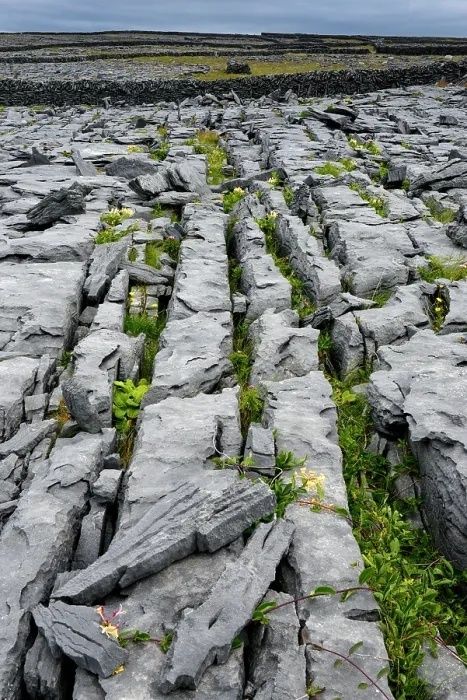
The Aran Islands are widely understood as an extension of the Burren limestone landscape across Galway Bay. Over geological time, soluble limestone has been weathered into broad slabs and distinct channels. The relatively level blocks are known as clints, while the cracks and deep grooves between them are called grykes. From a distance, the pavement can appear smooth and manageable. At paw level, it is a network of sharp edges, narrow gaps, loose stones, slippery algae, and sudden changes in height.
For a Golden Retriever, the risk is not limited to a small cut. Repeatedly stepping into grykes can twist a paw or strain a toe, while jumping across gaps may place unnecessary force on shoulders, elbows, hips, and cruciate ligaments. A dog that is excited, tired, or distracted may move faster than its body can safely manage. Keep the lead short enough to prevent lunging but loose enough to avoid constant pressure, and select routes with more grass or established paths when the pavement becomes too technical. Trainers may be adequate for ordinary island walking, but the more rugged sections deserve a deliberate equipment decision.
Booties and barrier waxes serve different purposes, and neither should be introduced for the first time on the ferry or halfway through a hike. Well-fitted boots can shield pads from sharp stone and provide some protection from wet surfaces, but they must be tested at home through short, positive sessions. Check for rubbing after several minutes and again after the walk. Paw wax is less intrusive and can help reduce dryness and minor abrasion, although it cannot protect against a deep fissure or a misplaced step. A practical comparison looks like this:
| Protection option | Strengths | Limitations |
|---|---|---|
| Dog boots | Strongest protection from sharp rock, grit, and wet ground | Require careful fitting, training, and regular checks |
| Barrier wax | Lightweight, easy to apply, and familiar to many dogs | Offers limited protection against deep cracks and jagged edges |
| Natural paw conditioning | Useful for building tolerance gradually before travel | Does not replace supervision or route selection |
Carry a small first-aid kit containing sterile saline, gauze, cohesive bandage material, and a way to cover a paw temporarily. Do not force a dog to continue on a bleeding or visibly painful foot. If a wound is deep, a nail is damaged, or lameness persists after rest, arrange veterinary assessment as soon as practical.
Ferry Logistics and Maritime Transitions Across Galway Bay
Ferry choices depend on the island, the season, and the amount of time available. Services operate from Rossaveel, west of Galway, while some visitor sailings leave from Galway City Docks. Galway City services can take about 90 minutes to reach Inis Mór and are generally designed around a same-day visit, with limited hours on the island. Rossaveel offers a different departure pattern and may be more suitable for travellers staying overnight or visiting smaller islands. Check the operator”s current timetable, pet policy, weather notices, and booking conditions rather than relying on an old schedule.
Dogs travelling from Galway City may be required to remain on the outside deck, and arrangements can differ by vessel and route. That matters for a Golden Retriever because a long crossing can combine noise, unfamiliar movement, wind, spray, and a crowd of strangers. A dog that is confident on land may become unsettled when the deck vibrates or the horizon moves. Feed a familiar, moderate meal well before departure, provide water, and speak with a veterinarian in advance if motion sickness has occurred before. Never give travel medication without professional advice.
Prepare the transition before arriving at the harbour. Allow extra time, especially when shuttle transport is involved, and keep the dog attached to secure equipment throughout the terminal process.
- Use a well-fitted harness with a backup collar connection and clearly visible identification.
- Bring a standard lead rather than relying only on a retractable lead, which can be awkward in crowds and around railings.
- Ask staff where dogs may wait and which deck areas are permitted.
- Choose the quietest legal position, away from heavy foot traffic, engines, and food service.
- Carry absorbent towels, waste bags, water, and a familiar mat that gives the dog a settled place to stand.
- Confirm the return sailing before setting out, especially when weather conditions are unsettled.
Do not allow a dog to lean over rails, chase seabirds, or greet every passenger. Calm waiting is a valuable travel skill, and gentle consistency will make the crossing easier for both dog and handler.
Field Hazards from Hidden Cliff Edges to Salt Spray Dehydration
Sites such as Dún Aonghasa are compelling precisely because they occupy an exposed cliff-top position. The approach may include steep or uneven ground, and unfenced edges can be difficult to judge when the dog is moving ahead. Gusts can also alter balance and make a lead suddenly feel much stronger. Keep the Golden Retriever on a lead near cliffs, narrow paths, and viewpoints, and position the dog on the landward side whenever possible. A reliable recall is valuable, but it should not be treated as a substitute for physical control where a single mistake could be fatal.
Island walks can be deceptively demanding. Some routes are mostly easy underfoot, yet a loop may take several hours and include wet ground, stone lanes, steep sections, or detours around historic sites. Salt spray and persistent wind increase moisture loss, while there may be no convenient stream or safe freshwater source for a dog. Dogs can continue exercising enthusiastically even as fatigue develops, particularly when they are stimulated by new smells and open space. Offer water regularly before the dog appears thirsty, provide rest in shelter, and avoid allowing the dog to drink seawater, which can cause gastrointestinal distress and dangerous salt loading.
A sporting breed pack should be light enough to carry comfortably but complete enough to handle a minor problem away from services. Use a numbered check before leaving:
- Water and bowl: Carry more fresh water than the planned distance appears to require, together with a collapsible bowl.
- Food and recovery snacks: Pack familiar treats or a small meal, avoiding sudden dietary changes on an active day.
- Weather protection: Bring a rainproof layer for the handler and, where tolerated, a suitable canine coat for cold, wet conditions.
- First aid: Include saline, gauze, bandaging material, tick removal equipment, and a charged phone in a waterproof pouch.
- Navigation: Carry a current map, downloaded route information, and a backup power source. Mobile coverage should never be assumed.
- Control equipment: Pack a spare lead, secure harness, identification details, and a long line only for appropriate open areas well away from livestock and cliffs.
- Comfort items: Bring towels, waste bags, and a lightweight mat for rest on rough or wet ground.
Watch for heavy panting that does not settle, weakness, stumbling, vomiting, confusion, or refusal to move. Move the dog into shelter, cool it gradually, offer small amounts of water, and seek veterinary help urgently if signs are severe or persistent. Planning a shorter route is not a failure. It is often the most responsible decision for an older Golden Retriever, a puppy, or a dog with joint, heart, or respiratory concerns.
Protecting Rare Island Flora and Agricultural Heritage
The limestone fissures support an extraordinary mixture of plants. Because of the islands” geology, thin soils, maritime exposure, and mild Atlantic influence, species associated with sub-Arctic, Alpine, and Mediterranean environments can grow within a surprisingly small area. Bloody Cranesbill, Kidney Vetch, thrift, sea campion, orchids, and other wildflowers occupy niches that may look like bare rock to an untrained eye. Kidney Vetch is especially significant because it provides larval food for the Small Blue Butterfly, a species affected by the loss of suitable chalk and limestone grassland.
Keep the dog on established paths and avoid encouraging sniffing or digging in fissures. Do not pick flowers, move stones, or allow a curious retriever to investigate nesting areas. The island is also a working agricultural landscape, not an open playground. Drystone walls mark boundaries and provide shelter, so never climb them, knock stones loose, or send a dog through gaps. Close gates exactly as found, give cattle and sheep a wide berth, and use a lead whenever livestock are nearby, regardless of how trustworthy the dog usually is.
- Carry out every bag of waste, including waste left near remote viewpoints.
- Stay on marked routes and respect signs, seasonal restrictions, and private land.
- Keep the dog from chasing birds, seals, rabbits, and grazing animals.
- Do not enter ruins, forts, enclosed fields, or beaches where dogs are restricted.
- Leave flowers, fossils, stones, shells, and archaeological features undisturbed.
- Choose a quiet alternative route if the dog is becoming overexcited or the path is crowded.
Leave No Trace is not simply a conservation slogan on the Aran Islands. It is a practical way to protect fragile habitats and preserve the goodwill that allows visitors to enjoy working landscapes with dogs.
Forge Unforgettable Island Memories with Mindful Preparation
An Aran Islands hike with a Golden Retriever succeeds when adventure is balanced by watchful guardianship. Prepare the dog for boats, unfamiliar surfaces, wind, and calm lead walking before the trip. Select routes according to fitness and weather, not ambition alone, and treat every cliff edge, fissure, gate, and grazing animal as a point requiring deliberate management. A Golden”s willingness to explore is a strength when paired with clear cues, sensible boundaries, and regular opportunities to rest.
After the hike, inspect every paw, including the spaces between the toes and around the nails. Rinse salt and grit from the feet, legs, and coat with fresh water, then dry thoroughly, paying attention to the feathering where debris can collect. Check for cuts, swelling, tenderness, unusual licking, stiffness, or delayed fatigue over the following day. Offer a quiet recovery period and a familiar meal. With steady preparation and respectful behaviour, visitors can enjoy the Atlantic frontier while helping ensure that its limestone pavements, wildflowers, farms, and historic places remain welcoming for generations of walkers and dogs.