


The Living Pulse of the Pub Corner
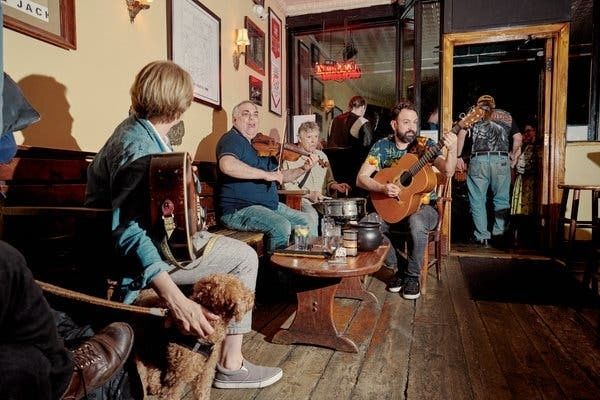
Stepping into an authentic Irish seisiún can feel less like arriving at a concert and more like entering a conversation already in progress. In one corner of the pub, fiddles may be trading phrases with a flute, a tin whistle may add a bright thread above the group, and an uilleann piper may shape the music with remarkable subtlety. There may be no stage, no announced programme, and no obvious beginning or ending. The musicians sit close together, often facing inward, while listeners gather around the edges and allow the sound to develop at its own pace.
That informality should not be mistaken for disorder. A genuine session is not a free-for-all, and it is not necessarily a performance arranged for visitors. It is a communal dialogue governed by listening, memory, local custom, and mutual respect. Players judge when to enter, how loudly to play, which tunes they know, and whether their instrument suits the group already present. Listeners also have responsibilities: they keep conversation under control, avoid blocking the musicians, support the pub, and recognize that the music deserves attention. The best preparation is simple: arrive with curiosity, observe before acting, and treat the session as a living social practice rather than a tourist attraction.
From Hearth to Snug How the Modern Session Came to Be
Irish traditional music developed for generations in domestic and community settings long before the modern pub session became familiar. Musicians played in kitchens, farmhouses, dance halls, and family gatherings, often without written scores or formal direction. A tune was learned by hearing it repeatedly, remembering its shape, and absorbing the regional style in which it was played. The social setting mattered as much as the melody. Music accompanied dancing, conversation, hospitality, and the ordinary business of maintaining relationships across a community.
As patterns of work, migration, and urban life changed, public houses and cultural centres increasingly became practical meeting places. The move from a rural kitchen to an urban snug did not remove the communal character of the music. Instead, it gave musicians who might otherwise have been separated by distance a regular place to meet. Dublin became especially important in this development, with neighbourhood pubs supporting musicians, singers, dancers, and listeners from different parts of Ireland. Modern sessions can therefore contain several layers of history at once: a regional tune, a family version of a melody, an urban arrangement, and a newcomer learning how to participate without disrupting the group.
In the twentieth century, urban revival spaces helped make session culture more visible and more durable. Smithfield in Dublin is strongly associated with this continuing tradition, and venues such as The Cobblestone have presented themselves as centres for Irish music, dance, culture, and community for decades. The pub describes a 35-year history and hosts traditional music sessions every day, with session times varying by day and season, so visitors should check the venue directly before travelling. This kind of place illustrates why a session is best understood as a community institution rather than a background-music package. A useful overview of its development appears in this history of the Irish traditional music session, which places contemporary gatherings within the broader relationship between Irish musicians, homes, pubs, and cultural life.
Instrumental Balance and the Sonic Pecking Order
The sound of a session depends on balance rather than equal volume. Fiddles, tin whistles, flutes, and uilleann pipes usually carry the principal melodic material. Several fiddles may play the same tune while adding individual ornamentation, and a flute or whistle can occupy a higher, penetrating register. Uilleann pipes add a distinctive reedy voice, but their drones and regulators also contribute harmonic colour. These instruments are melodic drivers, so players must listen carefully to one another instead of treating the gathering as an opportunity to demonstrate technical skill.
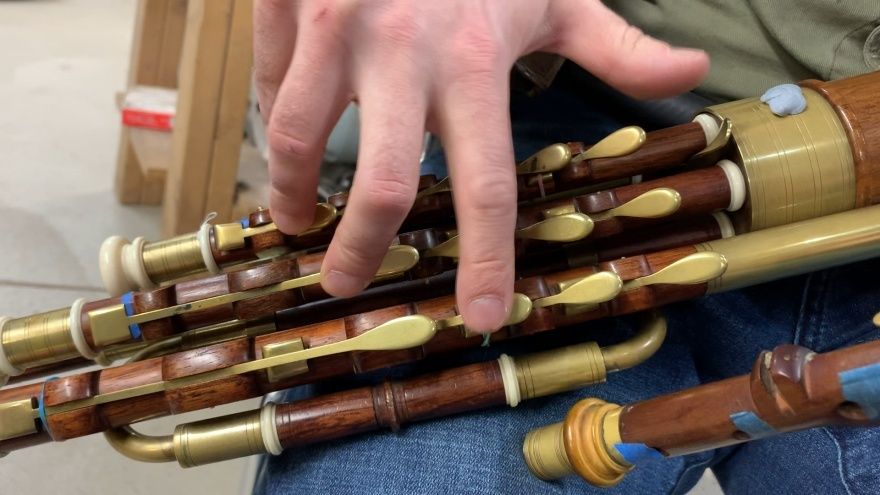
Accompanying instruments have a different responsibility. Guitarists may supply chords, pulse, and harmonic direction, but a heavy or poorly chosen accompaniment can cover the melody. The bodhrán provides rhythmic energy and can reinforce the lift of a reel or the swing of a jig, yet restraint is essential because its low frequencies travel easily through a crowded room. The following comparison is a practical guide, not a rigid hierarchy, since every group has its own sound and expectations.
| Instrument group | Primary role | Important acoustic consideration |
|---|---|---|
| Fiddle | Carries melody and ornamentation | Can be bright and cutting, especially in numbers |
| Flute and tin whistle | Leads or doubles the tune | High registers need room to remain clear |
| Uilleann pipes | Melody, drones, and harmonic colour | Requires careful listening because its tone is full and complex |
| Guitar | Chordal support and pulse | Volume and chord knowledge must serve the tune |
| Bodhrán | Rhythmic support | Strong low-frequency sound can dominate if played without restraint |
Unspoken Rules That Every Listener and Player Must Respect
The first rule is to listen before joining. A player who enters an established session should assess the standard, the repertoire, the available acoustic space, and the group”s attitude toward newcomers. It is courteous to make eye contact, ask permission, or speak quietly with one of the musicians during a natural pause. Knowing a handful of tunes is not always enough, particularly if the group moves quickly through connected sets. An accompanist should understand more than a small collection of interchangeable chords, while a melody player should be confident enough to follow without forcing the group to accommodate every uncertainty.
Once admitted, the musician must decide when not to play. Resting is not a sign of failure; it is part of the arrangement. If several fiddles are already carrying the tune, another fiddle may add little unless the player can blend with the established sound. A guitarist should avoid filling every silence, and a bodhrán player should learn to support the pulse without turning it into a competition. Tuning quietly before joining, sitting where the instrument will not obstruct others, and leaving unsuitable sets alone are small actions that protect the entire group.
Listeners shape the atmosphere just as surely as musicians do. Loud conversation, phone calls, flash photography, and movement directly beside a player can make concentration difficult. Sessions often begin later in the evening, but exact timing varies by venue, so visitors should check locally and arrive early if they need a seat. Buying drinks supports the pub and acknowledges the space that makes the gathering possible. Tipping is not a universal rule in the same way it may be for a staged show, but a discreet contribution or a purchase at the bar can be appropriate when the setting welcomes it. Above all, do not interrupt a set to request a tune. A set is a sequence chosen for momentum, shared memory, or harmonic compatibility. Wait until the musicians have finished, then ask politely if conversation seems welcome.
- Enter quietly and observe the group before approaching.
- Ask before joining, particularly if the session is already established.
- Play tunes you genuinely know, and rest when your part would muddy the sound.
- Keep instruments tuned and match the group”s volume rather than competing with it.
- Keep conversation, phones, and movement away from the musicians” immediate space.
- Support the venue and respect local rules about age, seating, photography, and closing times.
Safeguarding Oral Heritage Across Generations
Aural learning is one of the session”s defining strengths. Instead of relying on a conductor or a fixed printed score, musicians absorb a tune through repeated listening. The learner first recognizes the broad contour, then the rhythm, phrasing, ornamentation, and local variations. This method allows a melody to remain recognizable while changing subtly from one player or county to another. It also teaches an important musical humility: technical accuracy is valuable, but understanding how a tune breathes within a particular community matters just as much.
Intergenerational transmission keeps that knowledge active. An experienced player may show a younger musician how to shape a bow stroke, place a triplet, accompany a reel, or leave space around a piper. Youth workshops, Comhaltas branches, cultural centres, family gatherings, and regular pub sessions all provide routes into the tradition. Archival work complements, rather than replaces, this living exchange. The Irish Traditional Music Archive collects recordings, documents, photographs, and other materials that help preserve regional voices and historical context. Its importance is discussed in this archive access case study. Documentation can protect fragile memories for future generations, while active sessions ensure that the music remains more than an object behind glass.
Pull Up a Stool and Listen Well
An Irish seisiún works because people share responsibility for the sound and the setting. Musicians contribute tunes, rhythm, attention, and restraint. Listeners provide quiet concentration and practical support. The pub provides a social room in which strangers can become temporary companions through a melody everyone recognizes. For a culturally curious traveller, the most authentic experience may not be the loudest or most polished one. It may be the session in which the players make room for one another, move naturally from one tune to the next, and allow a newcomer to understand the rules by watching.
Use the following checklist when approaching a session:
- Check the venue”s current details before visiting, since schedules, admission rules, and session arrangements can change.
- Arrive early enough to find an appropriate place without interrupting the musicians.
- Listen through at least one set before speaking, photographing, or considering whether to join.
- If playing, ask permission, choose familiar material, tune quietly, and match the group”s volume.
- If listening, keep conversation low, support the bar, and leave the musicians free to guide their own repertoire.
The quiet hospitality of a session is earned through consideration. Approach without entitlement, accept that every group has its own character, and let the music set the pace. With calm attention and sensible manners, even a first visit can become a genuine encounter with Ireland”s communal musical life.